Blog

  • Why Cutting Fabric Along the Grain Matters (And How to Check It)

    If you’ve ever finished a sewing project only to find it twists, pulls, or doesn’t hang the way you imagined, you’re not alone. Many sewists—especially beginners—experience this, even when they follow a pattern carefully.

    Very often, the problem isn’t the stitching or the pattern at all. It starts much earlier, at the cutting stage.

    Understanding fabric grain and why it matters is one of the most important foundational skills in sewing. It’s a small detail that makes a big difference—and once you learn it, your projects will immediately improve.

    What is fabric grain?

    Fabric grain refers to the direction of the threads in a woven fabric. These threads run in specific directions, and how you cut your fabric in relation to them affects how your finished project behaves.

    Lengthwise grain

    This runs parallel to the selvage (the finished edge of the fabric). It has the least amount of stretch and provides strength and stability.

    Crosswise grain

    This runs perpendicular to the selvage. It has slightly more give than the lengthwise grain but is still relatively stable.

    Bias

    The bias runs diagonally (at a 45° angle) across the fabric. This direction has the most stretch and drape, even in non-stretch fabrics.

    Most sewing patterns are designed to be cut on the grain, usually the lengthwise grain, unless stated otherwise.

    Why cutting on the grain is so important

    Cutting fabric along the correct grain ensures your project behaves the way it was intended to. When fabric is cut off-grain, it may look fine at first—but problems often appear once the item is worn, washed, or handled.

    • Better drape and hang – garments fall naturally and evenly
    • Balanced stretch – fabric stretches only where it should
    • Smoother seams – pieces align properly during sewing
    • Longer-lasting results – less twisting and distortion over time

    Even quilting and home décor projects benefit from accurate grain cutting—especially where straight edges and symmetry matter.

    What happens when fabric is cut off-grain?

    Cutting off-grain doesn’t always cause immediate issues, which is why it’s often overlooked. However, common problems include:

    • Skirts or trouser legs twisting around the body
    • Sleeves pulling forward or backward
    • Hems that refuse to sit straight
    • Seams that ripple or pucker
    • Fabric warping after washing

    These issues can be frustrating—especially when you’ve spent time and care sewing your project. The good news is that many of them are completely preventable.

    How to find the grain of your fabric before cutting

    Before placing your pattern pieces, take a few minutes to prepare your fabric properly.

    1) Use the selvage

    The selvage edge runs along the lengthwise grain. Fold your fabric so the selvages align evenly—this helps square the fabric.

    2) Square the fabric

    If the cut end of the fabric isn’t straight, trim it so it forms a right angle with the selvage before you start cutting pattern pieces.

    3) Pull a thread (woven fabrics)

    Gently pull a single thread across the width of the fabric. The resulting line shows the true crosswise grain and gives you a straight cutting guide.

    4) Press before cutting

    Ironing your fabric removes distortions caused by folding, storing, or handling. Flat fabric equals more accurate cutting.

    A small step that makes a big difference

    Cutting fabric along the grain may feel like an extra step, but it’s one of the most valuable habits you can develop as a sewist. It sets the foundation for everything that follows—cutting, sewing, pressing, and finishing.

    • Look more professional
    • Fit and hang better
    • Last longer
    • Feel more satisfying to complete

    Before your next project, pause at the cutting stage and take a moment to check the grain. Your future self—and your fabric—will thank you.

    Next steps

    If you’re building confidence with sewing basics, you can bookmark this post and come back anytime. In upcoming tutorials, I’ll show you how proper grain alignment works in real sewing projects—from simple makes to more advanced patterns.

    Accurate cutting is only one part of successful sewing. Seam accuracy matters just as much, and you may find it useful to practise a scant quarter inch seam allowance to improve your results.
  • Welcome to Crafting with Beth

    Hello and welcome. I am so glad you are here. Crafting with Beth is a creative home built around the joy of making things by hand, using yarn, fabric, and a whole lot of imagination.

    A place for crochet and sewing lovers

    If you love the soothing rhythm of crochet hooks, the gentle hum of a sewing machine, and the magic of turning simple materials into something beautiful and useful, you are in exactly the right place.

    This blog brings crochet and sewing together in one calm, welcoming space, where creativity flows naturally and learning feels enjoyable rather than overwhelming.

    What you will find here

    Crafting with Beth is all about sharing practical, inspiring, and approachable content. Here you will find:

    • Crochet patterns ranging from relaxing stitches to thoughtful handmade projects
    • Sewing patterns designed to be useful, timeless, and enjoyable to make
    • Step by step tutorials explained in a clear and beginner friendly way
    • Creative inspiration to help you enjoy the process and trust your hands

    More than just making

    Crafting has always been more than just a hobby for me. It is a way to slow down, focus, and create something meaningful. Whether it is a cosy crochet blanket or a carefully sewn pouch, every handmade piece carries its own story.

    This space is not about perfection. It is about progress, creativity, and confidence. Handmade items do not need to be flawless to be beautiful. They simply need care, curiosity, and joy.

    Designed for real life crafting

    As this blog grows, you can expect patterns and tutorials that fit into real life. Projects that respect your time, your space, and your skill level, while still giving you that wonderful feeling of I made this.

    Let us create together

    Whether you are picking up yarn or fabric for the first time, or you have been crafting for years, I hope Crafting with Beth becomes a place you love to return to.

    Thank you for being here at the beginning of this journey. Let us make something beautiful together.

    Beth

  • How a newly wound yarn cake looks — clean, tidy, and ready to use

    Freshly wound yarn cakes are one of my favourite parts of starting a crochet or knitting project. The smooth edges, even tension, and clean finish make everything feel so calming and organised.
    Yarn lovers — does this bring you the same joy?

  • A closer look of the Woodland wildflower Rainbow blanket

    I just wanted to share how the woodland wildflower granny square blanket could look like. Full potential for different color variations

  • A different way of connecting your granny square

    I just wanted to share with you connecting the typical/ original granny square in different manner. Instead of connecting them side to side, I am connecting them corner to corner. The granny square as we know of it just had a boost, an it is rather nice looking, and it gives the crocheter another skill to create a half triangular granny square, including the quarter..

  • Pattern in the making for the Woodland Wildflower Rainbow blanket

    Exciting news, pattern will be available soon for this colorful blanket, suitable for all ages. Just finishing up the borders to help you finish your project.

    You can watch my youtube video on how to create this lovely square. https://youtu.be/m5EGg2C8a3U

  • The Leonora Granny Square Blanket Rainbow Cast in the making

    I have started a new granny square blanket using the Leonora Granny Square. This blanket will have a touch of rainbow, and is suitable for all ages.

  • The Women’s Institute Premium Acrylic DK Yarn Haul

    I have stumble upon for the first time an acrylic yarn exclusive to Hobbycrafts here in the UK. The Women’s Institute Premium Acrylic Yarn is a 100% acrylic yarn. For this post, I am featuring the double knit (DK) yarn.

    About the Yarn

    The yarn is advertised as premium acrylic yarn as printed on the label. I would agree. Examining the yarn closely at first glance, it is truly carries the “premium” label. The thickness of the yarn is consistent. It has a nice sheen, not too much as you can still see a a more matt finish on it. It is nice and soft but not as soft as soft as the other brand I have in my yarn treasure chest.

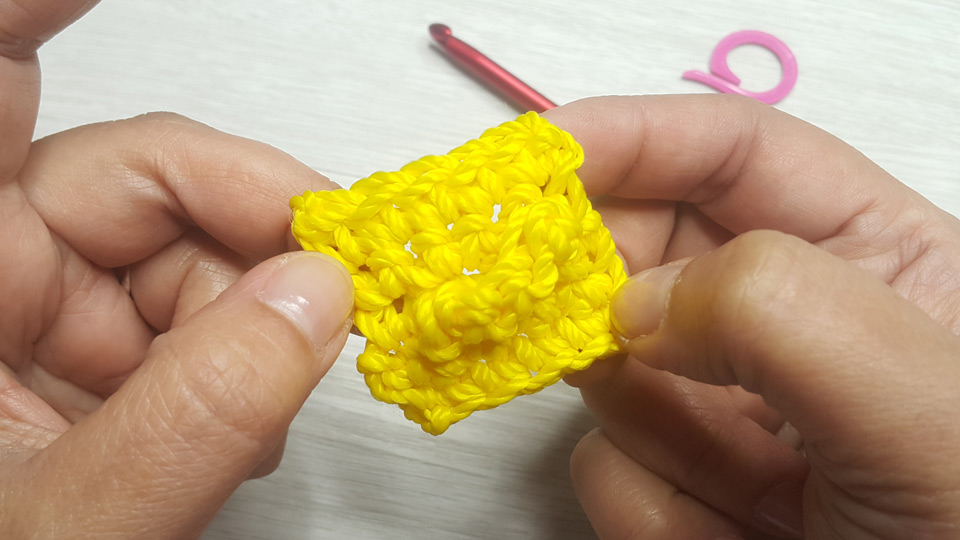
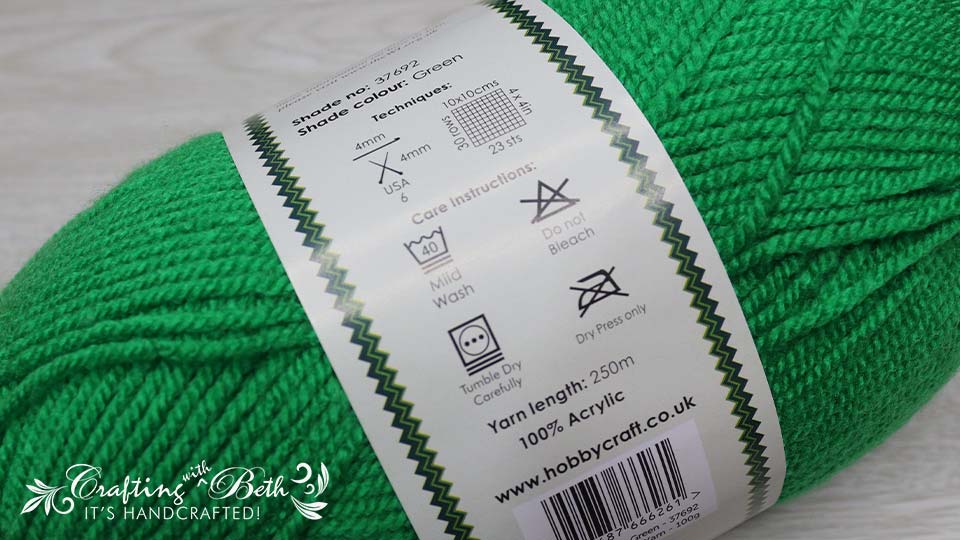
    The recommended crochet hook is 4mm. I made a some granny square to test some result. yes I would agree that 4mm is the right crochet hook for this yarn. I wouldn’t go down nor up. The tension square on the label requires 23 stitches and 30 rows to build a 4 inches (10cm) tension square. For my understnading this is measured by crocheting the single crochet stitches.

    One of my top requirements in considering buying yarn is the wash temperature. I don’t really want to wash daily or common garments in another temperature. My normal washing temperature is 40 degrees. I am glad that this yarn is so I don’t need to worry about forgetting to separate them. It can be tumble dried and dry press only.

    Women's Institute Premium Acrylic DK Yarn in Green showing back label

    Each ball of yarn weighs 100g and it will give you a length of 250m.

    The yarn is manufactured in Turkey exclusive to Hobbycrafts.

    There about 20+ color variations for this yarn, not as much as competition yarns such as Paintbox and Sylecrafts.

    What is my thoughts about the brand?

    The yarn is the most expensive in the yarn brands I have. Each ball cost £2.30 (02/2021). Compare to other DK yarns Paintbox at £2.25, Stylecraft Special at £1.85, Red Heart Soft at £1.99, Marriner at £1.20, and the cheapest brand I have is £0.99p.

    Yes it is premium, and you are paying for the quality. But Hobbycrafts always put them on offer 3 for 2 in which each ball will only cost you £1.53. That is a winning price!

    Would I buy this again? Yes! But only if the offer is there. Anyone would always want a bargain.

    Is this in my favourite list? Yes!

  • Learning the Stitch Count in a Pattern

    You have found a nice stitch design and you want to make a tension square before adding the design to your project.

    Let’s say the stitch you are about to work on is the cable stitch, and you were prompted that the stitch requires multiple of 3 stitches + 2 + 1 for the base chain.

    Ok. Great! But have you ever asked what those extra stitches are for? Stitch counts matters especially when you are about to embark and pride yourself to design your own crochet project. It is important that each stitch design married together with the other stitches you wanted to incorporate in.

    Let’s go ahead and let’s find out the stitch count behind the cable stitch. First of all let’s make just 1 cable stitch which requires 3 stitches. And then we are going to add 2 more stitches for some reason, and another one for the base chain. To start with, it will only means I will need to chain 6 altogether to make one single.

    Let’s start with the chain 1 for the base chain.
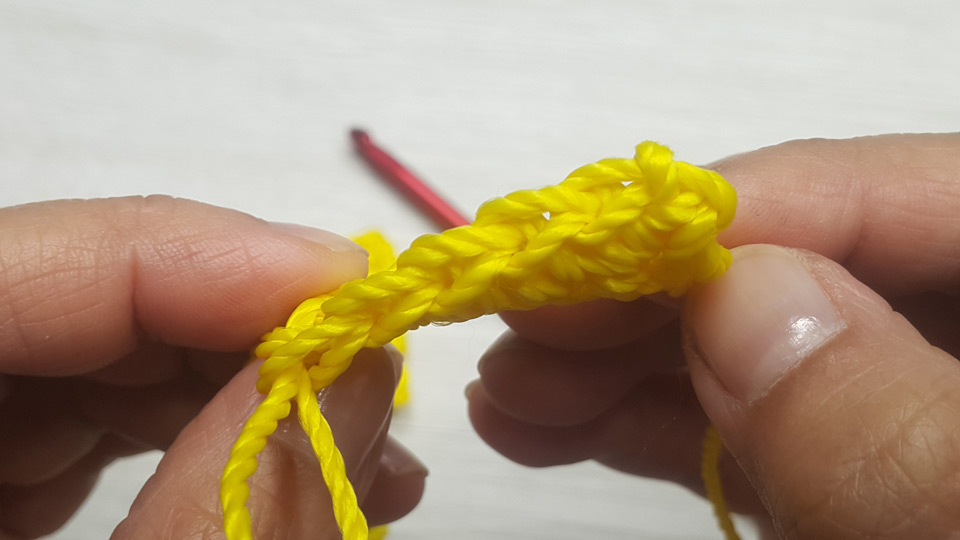
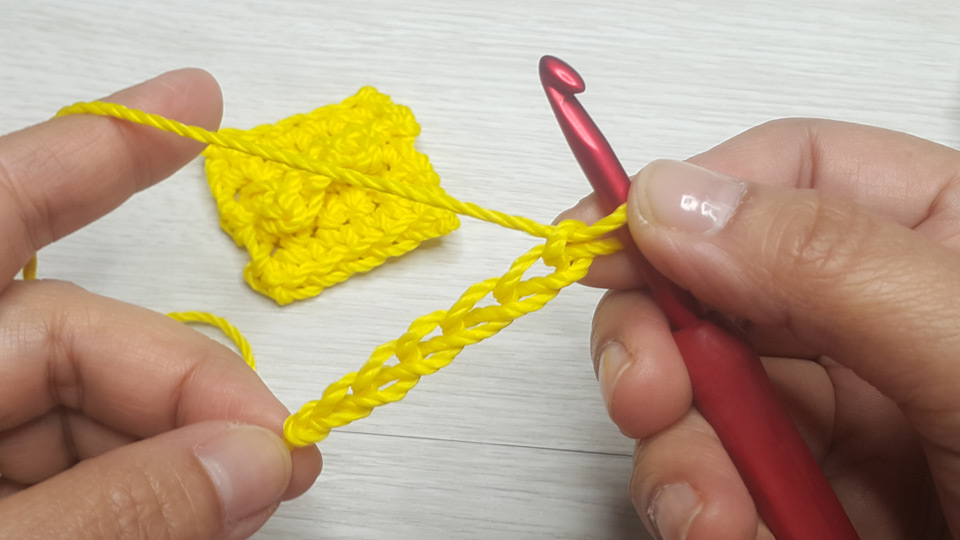
    So we chain 6. To start the first row, for this sample I will need to make a row of single crochet stitches. To start, I would need to skip at least 1 chain from the hook to perform my first single crochet. And that’s it! That is the “chain 1 for the base chain”. It will not count as a stitch as all (for this example). It means we are going to have 5 working stitches through out the pattern. Let’s say that this base chain is actually our turning chain to start the next row. Though this is not always the case, it will depend on the pattern itself.

    Chain stitch

    So, I’ll carry on making 2 rows of single crochet stitches. As you can see, you can only see 5 stitches on the top row. Great! We are on the right track.

    Now, let’s get on with the + 2.
    We understand that the cable stitch only requires 3 stitches to complete a stitch. Where does the other 2 stitches fit in? When you are working in a row, you would want your left and right edges to be somehow all straight as you grow your rows. That’s it! That’s the reason for it.

    stitch count

    So for this very simple pattern, I would start with one single crochet (that’s 1 stitch), proceed with the cable stitch (that’s 3 stitches), and end the row with another single crochet (that’s 1 stitch). This will give me 5 stitches. The base chain will always be there because you’ll need it to start the next row.

    cable stitch

    The next question is, are they always needed?
    The + 2, yes, if you are going to work on project row wise, meaning not in the round. No, if you are working in a round. That is why it is separated from the stitch count. The base chain will always be there as you will need it as a turning chain.

    I hope this mini blog helped you understand stitch counts.

  • Loving my new Susan Bates Inline Crochet Hooks

    I’m loving my new sets of Susan Bates crochet hooks. I know I’m a fan of Tulip crochet hooks 100% but I wanted to try an inline crochet. I will post a blog with regards to the 2 types of crochet hooks.

    If you are interested to get these hooks here is the link to the Amazon website.

    Please bear in mind the link is an affiliate link. It only means if you purchase the hooks using my referral link, I get few pences from Amazon at no cost to you.